Embedded AI Device
Story Spinner
Story Spinner is a modular AI-driven storytelling device built on a Raspberry Pi Zero 2 W with a custom enclosure and dedicated display controller PCB. The system generates dynamic stories, character artwork, and expressive narration in real time using the Gemini API. The text-to-speech pipeline is built around token-aware streaming rather than static sentence synthesis. As the language model generates tokens, they are streamed directly into the voice engine, allowing it to interpret punctuation, phrasing, and narrative structure in context. This enables natural inflection, pacing, and emotional continuity across sentences instead of robotic, fragmented speech. By separating interface logic, generative text processing, and audio synthesis layers, the architecture maintains real-time responsiveness while preserving story-level context and expressive delivery.
Edge-to-Cloud Architecture
Embedded Linux
Generative AI
Modular System Design
Interactive Device Engineering
Story Spinner
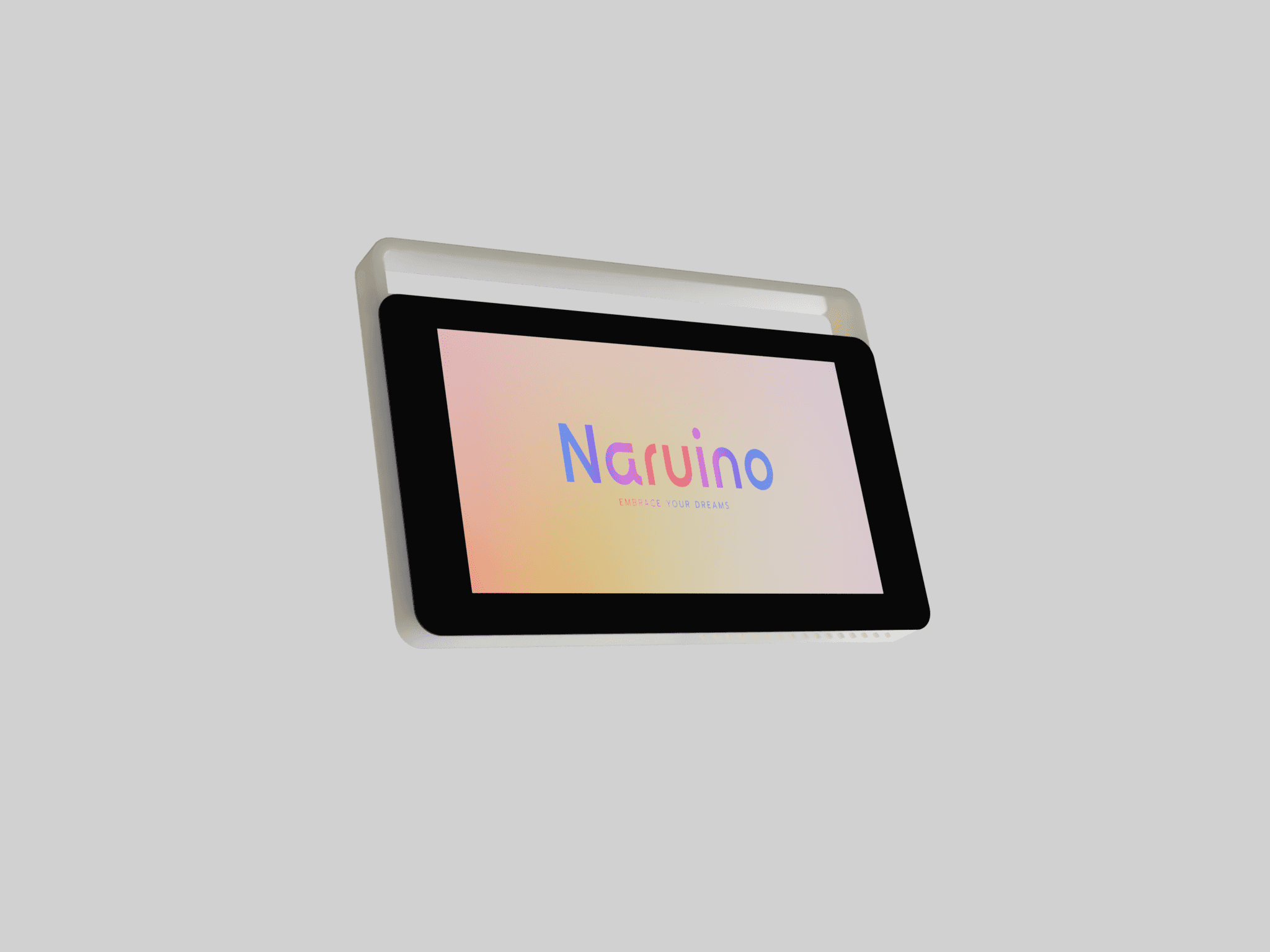
An image of Story Spinner!
Embedded AI Storytelling Platform
Story Spinner is a custom-built interactive storytelling device powered by a Raspberry Pi Zero 2 W, housed in a fully custom-designed enclosure with a dedicated display controller PCB. The system generates dynamic stories, images, and expressive narration in real time using the Gemini API. The architecture blends edge hardware control with cloud-based generative AI, allowing the device to function as a self-contained creative platform rather than a static media player.
Embedded AI Storytelling Platform
Story Spinner is a custom-built interactive storytelling device powered by a Raspberry Pi Zero 2 W, housed in a fully custom-designed enclosure with a dedicated display controller PCB. The system generates dynamic stories, images, and expressive narration in real time using the Gemini API. The architecture blends edge hardware control with cloud-based generative AI, allowing the device to function as a self-contained creative platform rather than a static media player.
Embedded AI Storytelling Platform
Story Spinner is a custom-built interactive storytelling device powered by a Raspberry Pi Zero 2 W, housed in a fully custom-designed enclosure with a dedicated display controller PCB. The system generates dynamic stories, images, and expressive narration in real time using the Gemini API. The architecture blends edge hardware control with cloud-based generative AI, allowing the device to function as a self-contained creative platform rather than a static media player.
Embedded AI Storytelling Platform
Story Spinner is a custom-built interactive storytelling device powered by a Raspberry Pi Zero 2 W, housed in a fully custom-designed enclosure with a dedicated display controller PCB. The system generates dynamic stories, images, and expressive narration in real time using the Gemini API. The architecture blends edge hardware control with cloud-based generative AI, allowing the device to function as a self-contained creative platform rather than a static media player.
Hardware Architecture & Display Control
Designed a custom display interface board to integrate a non-standard screen with the Raspberry Pi Zero 2 W inside a compact enclosure. Structured power routing, signal integrity, and GPIO mapping to ensure stable operation within constrained mechanical tolerances. The system was engineered for modular upgrades, allowing future expansion of compute, display, or input systems without redesigning the entire device.
Hardware Architecture & Display Control
Designed a custom display interface board to integrate a non-standard screen with the Raspberry Pi Zero 2 W inside a compact enclosure. Structured power routing, signal integrity, and GPIO mapping to ensure stable operation within constrained mechanical tolerances. The system was engineered for modular upgrades, allowing future expansion of compute, display, or input systems without redesigning the entire device.
Hardware Architecture & Display Control
Designed a custom display interface board to integrate a non-standard screen with the Raspberry Pi Zero 2 W inside a compact enclosure. Structured power routing, signal integrity, and GPIO mapping to ensure stable operation within constrained mechanical tolerances. The system was engineered for modular upgrades, allowing future expansion of compute, display, or input systems without redesigning the entire device.
Hardware Architecture & Display Control
Designed a custom display interface board to integrate a non-standard screen with the Raspberry Pi Zero 2 W inside a compact enclosure. Structured power routing, signal integrity, and GPIO mapping to ensure stable operation within constrained mechanical tolerances. The system was engineered for modular upgrades, allowing future expansion of compute, display, or input systems without redesigning the entire device.
Generative AI & Natural Voice Synthesis
Integrated the Gemini API to generate narrative content dynamically based on structured user inputs such as character, setting, and action. Implemented tokenization-aware streaming to enable highly natural voice synthesis with realistic inflection and pacing rather than robotic text-to-speech output. The system generates synchronized story text, illustrative imagery, and expressive narration in a cohesive pipeline.
Generative AI & Natural Voice Synthesis
Integrated the Gemini API to generate narrative content dynamically based on structured user inputs such as character, setting, and action. Implemented tokenization-aware streaming to enable highly natural voice synthesis with realistic inflection and pacing rather than robotic text-to-speech output. The system generates synchronized story text, illustrative imagery, and expressive narration in a cohesive pipeline.
Generative AI & Natural Voice Synthesis
Integrated the Gemini API to generate narrative content dynamically based on structured user inputs such as character, setting, and action. Implemented tokenization-aware streaming to enable highly natural voice synthesis with realistic inflection and pacing rather than robotic text-to-speech output. The system generates synchronized story text, illustrative imagery, and expressive narration in a cohesive pipeline.
Generative AI & Natural Voice Synthesis
Integrated the Gemini API to generate narrative content dynamically based on structured user inputs such as character, setting, and action. Implemented tokenization-aware streaming to enable highly natural voice synthesis with realistic inflection and pacing rather than robotic text-to-speech output. The system generates synchronized story text, illustrative imagery, and expressive narration in a cohesive pipeline.
Upgradable System Design
Designed Story Spinner with long-term evolution in mind. The hardware and software stack supports modular expansion, allowing the platform to grow from a simple interactive story device into a broader STEM-oriented learning system. The architecture separates interface logic, generative processing, and hardware control to enable iterative feature development without hardware lock-in.
Upgradable System Design
Designed Story Spinner with long-term evolution in mind. The hardware and software stack supports modular expansion, allowing the platform to grow from a simple interactive story device into a broader STEM-oriented learning system. The architecture separates interface logic, generative processing, and hardware control to enable iterative feature development without hardware lock-in.
Upgradable System Design
Designed Story Spinner with long-term evolution in mind. The hardware and software stack supports modular expansion, allowing the platform to grow from a simple interactive story device into a broader STEM-oriented learning system. The architecture separates interface logic, generative processing, and hardware control to enable iterative feature development without hardware lock-in.
Upgradable System Design
Designed Story Spinner with long-term evolution in mind. The hardware and software stack supports modular expansion, allowing the platform to grow from a simple interactive story device into a broader STEM-oriented learning system. The architecture separates interface logic, generative processing, and hardware control to enable iterative feature development without hardware lock-in.